
You're standing in the garage of a house you just bought, or one you're about to make an offer on, and you hit the opener button. The door groans, hesitates, then drops the last foot with a thud instead of settling down quietly. The inspection report said "garage door operational." It didn't say anything about that thud. This happens constantly in Chester County's older housing stock, where doors have been painted over, repaired piecemeal, and left to fight through decades of freeze-thaw winters without a real evaluation. Home inspectors check that the door opens and closes and that it reverses when something is in the way. That's about it. Here's what else deserves a look, and what it means if something fails.
Walk the Garage With This Checklist
1. The Balance Test
Pull the emergency release cord to disconnect the opener, then lift the door by hand to about waist height and let go. A properly balanced door stays put. If it slams down or shoots upward, the springs are no longer matched to the door's weight. This is often the result of a previous repair where only one spring was replaced, or springs that have simply weakened with age. A door that fails this test is putting extra strain on the opener every single time it runs, and that opener will fail sooner for it.
2. Spring Condition and Type
Look up at the torsion spring above the door, or check the sides for extension springs. Surface rust on the coils is common and not automatically disqualifying, but flaking, pitting, or visible gaps between coils where there shouldn't be any is a sign the spring is near the end of its life. Springs have a rated cycle count, and nobody tracks how many cycles a used door has been through, so visible wear is the only clue you'll get. A spring that lets go unexpectedly is one of the more dangerous garage door failures, so this isn't a wait-and-see item.
3. Cables and Pulleys
The lift cables run alongside the springs down to the bottom brackets. Frayed strands, rust bleeding onto the cable, or a cable that looks slack on one side and taut on the other all point to problems. A fraying cable under tension can snap, and when it does, the door can drop hard or swing unevenly.
4. Track Alignment
Stand back and sight down both tracks. They should run perfectly parallel with no bends, dents, or gaps where the track meets the wall bracket. Bent tracks are common in older garages where a car bumped the frame at some point, and they cause the rollers to bind, which shows up as grinding or jerking motion even if the door still technically opens and closes.
5. Rollers
Look at the rollers themselves, the wheels that ride in the track. Steel rollers without nylon housings are louder and wear out faster, and on older doors they're often original equipment. Cracked or chipped nylon rollers, or ones with flat spots, mean the door isn't rolling smoothly, which puts more load on the opener and the springs.
6. Weatherstripping and Bottom Seal
Check the rubber seal along the bottom of the door and the flexible stripping around the sides and top. In this part of Pennsylvania, a cracked or missing seal isn't just a comfort issue. It lets snowmelt and road salt spray in during winter storms, invites humidity and pests in summer, and can let meltwater pool against the garage floor where it refreezes overnight. A seal that's hardened, torn, or pulling away from the track is an easy fix now and an expensive one if it leads to rust on the bottom panel.
7. Bottom Panel and Corners
Run your hand along the bottom edge of the door and press on the corners. Soft spots, bubbling paint, or visible rust-through are classic signs of years of salt and moisture exposure, especially on original doors that predate modern galvanized or vinyl-backed steel. A compromised bottom panel will keep deteriorating and eventually needs section replacement or a full door swap.
8. Auto-Reverse Safety Function
Lay a 2x4 or a roll of paper towels flat on the ground where the door would close, then run the door down. It should reverse immediately on contact. Also check for photo-eye sensors near the floor on each side of the track; if they're missing, disconnected, or knocked out of alignment, the door may not have this protection at all. Older openers installed before modern safety standards sometimes lack auto-reverse entirely, which matters a great deal in a household with kids or pets.
9. Manual Release and Opener Age
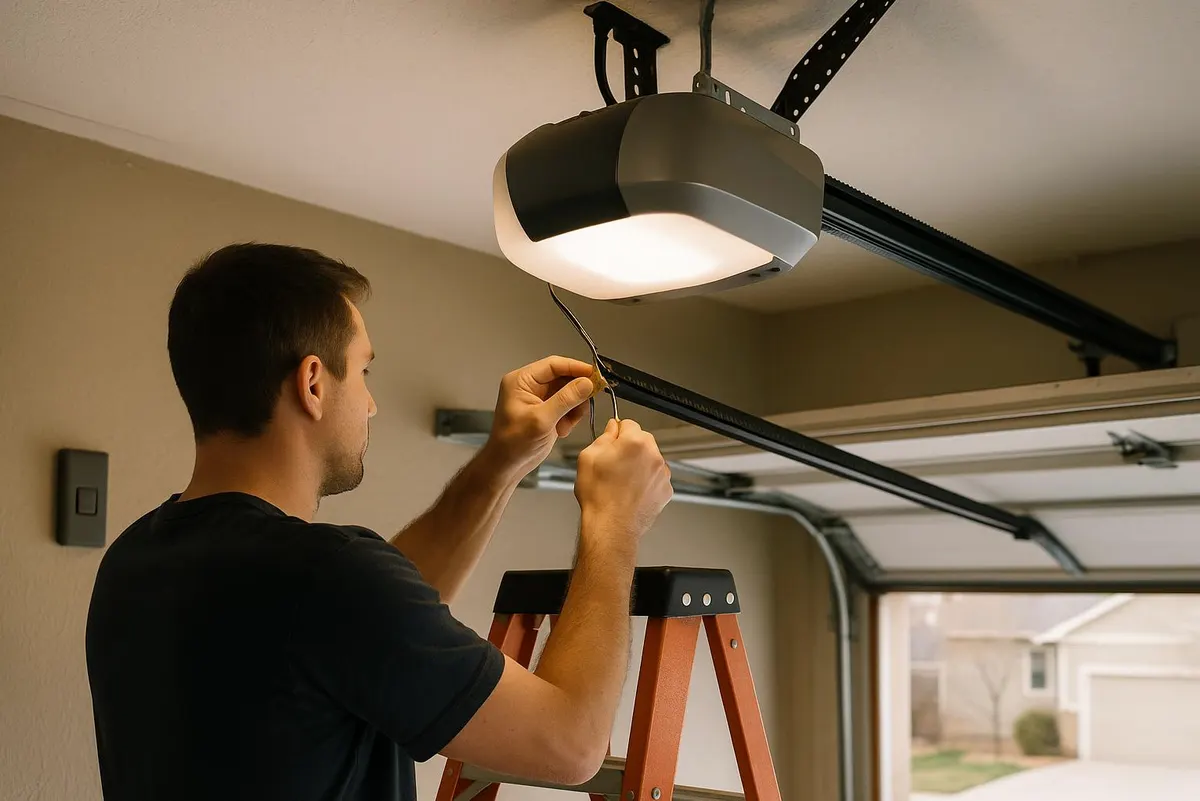
Find the emergency release cord and make sure it's reachable and not seized up with old grease or rust. If the opener itself is visibly dated, with an old logic board, no battery backup, and a keypad with worn-off numbers, plan on it needing replacement sooner rather than later, especially if it's already struggling to lift a door that failed the balance test above.
When to Call Coatesville Overhead Door Co
If your walkthrough turns up a door that's out of balance, springs with visible wear, or an opener that skips the safety reversal test, those aren't DIY fixes. Coatesville Overhead Door Co offers spring replacement and garage door maintenance and tune-up service that addresses exactly these issues in one visit, rebalancing the door, replacing worn cables and rollers, and testing the opener's safety functions properly. If the door and hardware are generally sound but outdated or inefficient, a garage door opener installation and repair visit can modernize the safety features and give you a quieter, more reliable system without replacing the whole door.
Whether you just closed on a home in Coatesville, Downingtown, or anywhere else in Chester County and want a second opinion on the garage door, or you've lived there for years and noticed something off during this checklist, call Coatesville Overhead Door Co for an inspection you can actually trust.